
Compliance as a Revenue Driver: Archiving for SaaS Vendors
Apr 17, 2026

Hanna Lorenzer
Apr 17, 2026

Why compliance is a hidden gold nugget!
If no one wants to do something—take care of it and sell it!
In my professional work experience, I have never met anyone who was thrilled when they heard the words “compliance” or “archiving.” It’s like getting a reminder from the tax office to file your tax return—you know you must engage with the topic, but you try to avoid thinking about it or doing it as much as possible. In the enterprise context, the relationship to compliance is exactly the same.
This is precisely why it’s attractive to monetize compliance. Why? Just think about why there are so many lawyers and tax consultants—and why they drive a Mercedes and not a Lada (hint: people pay more for things no one wants to do). In this article, I want to talk about why and how the sales psychology behind compliance works in the context of software products, and how ERP and SaaS vendors can use this to boost relevant financial metrics for their business model.
Do you pay for your airbag?
Generally, compliance is one of the few things customers pay for without ever wanting to interact with it. There is low daily usage, little to no productivity gain, and no immediate visible “success moment.” Still, budgets get approved with surprising consistency across SaaS and ERP markets. In a Thomson Reuters report from 2023, over 80% of companies agreed that risk and compliance are valued business advisory functions. Why might this be the case?
The reason is not regulation alone. Compliance is not bought for what it enables, but for what it prevents. When vendors treat compliance like a normal product feature, it inevitably looks like a cost center. But when customers buy compliance features, they are essentially paying for risk reduction and psychological relief.
Think of compliance like an airbag in a car.
You don’t buy a car because you’re excited to use the airbag. You actually hope you’ll never experience the moment it deploys. There’s no daily interaction, no productivity boost, no “success” you can point to when everything is normal. And yet, people are glad it’s there.
Why? Because the airbag isn’t purchased for what it enables in everyday driving. It’s purchased for what it prevents when something goes wrong.
Buying dynamics for compliance features — The Chain of Pressure
To understand why customers pay for compliance, we must understand the bigger picture.
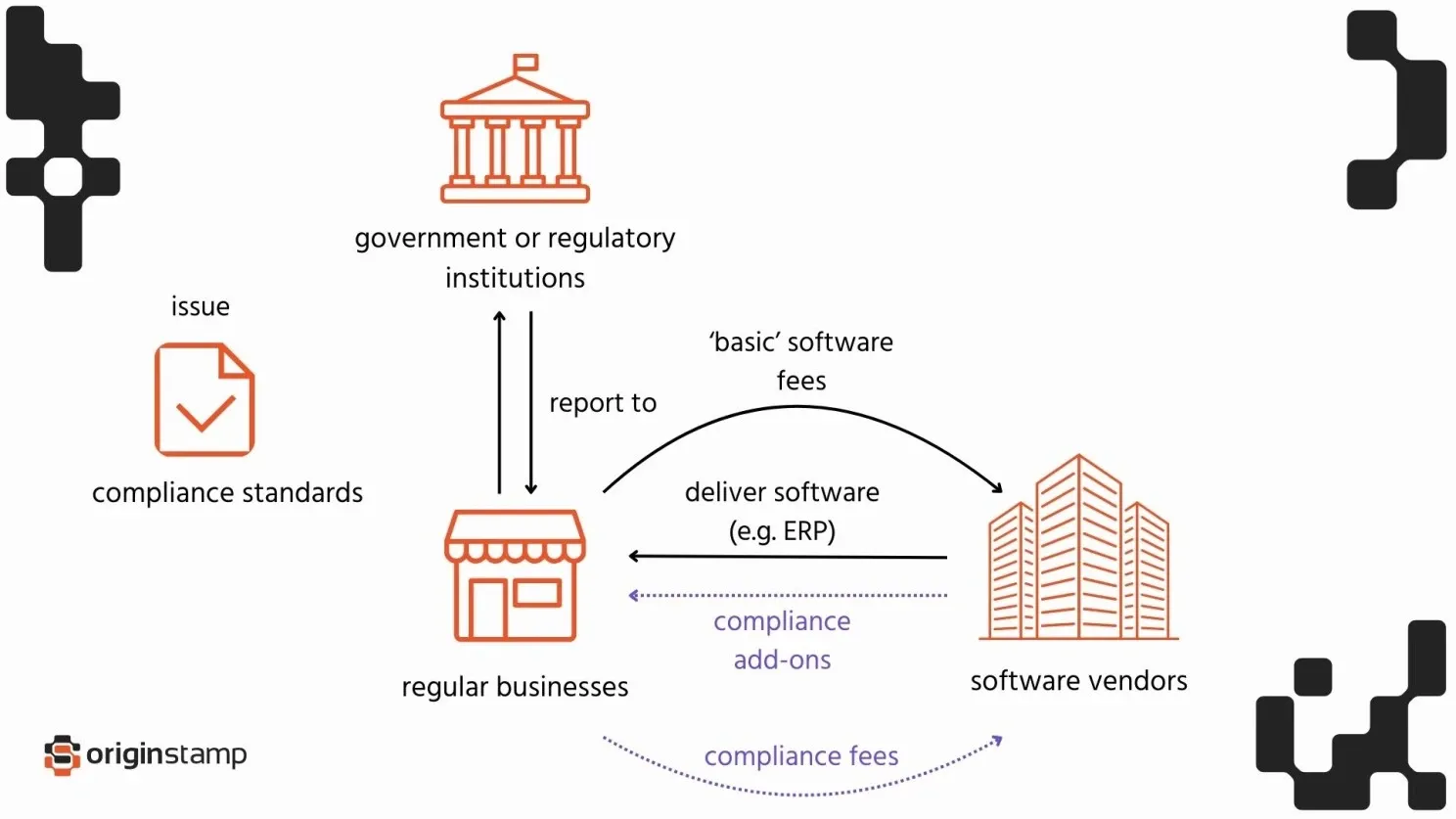
The following actors exist:
The regulator / standards body: Governments or organizations (ISO, DIN, SEC) define the boundary conditions. They set the rules to follow (airbags make sense).
Regular businesses: These standards and rules create a new, often complex problem for businesses. They are experts in their domain (e.g., manufacturing, logistics, retail), but not in solving compliance issues. Therefore, they need an external party to solve the problem reliably.
Software vendors: They typically provide module-based software packages (here summarized as “basic” software fees) to the customer. Some add-on modules are shipped with compliance already integrated; other compliance add-ons need to be purchased from additional vendors.
The business owner has to choose between one of the following options:
Option A (Risk): Ignore compliance complexity, build a workaround, or do nothing at all—and carry the risk of non-compliance.
Option B (Relief): Pay a premium to a vendor to solve the problem definitively.
Option C (Painful): Try to come up with a compliant solution yourself.
The customer is not really looking for a “feature.” Their only goal is to tick the box with the lowest cost possible. When a software vendor can provide the “adequate” answer to an auditor’s question at lower cost than a “build-it-yourself” solution, they are essentially selling the removal of a mental burden.
How are archiving and compliance connected?
Depending on the business context, there are many laws internationally that require companies to keep certain records for a defined retention period in order to prove business events took place in the past. Archiving systems are widely used to fulfill these laws.
A few widely referenced international standards set the conceptual baseline for archiving systems, like ISO 15489 (records management) or the OAIS reference model (ISO 14721). When you compare different international regimes (e.g., the EU VAT Directive, SEC Rule 17a-4), the overlap is striking:
- defined retention periods for core business records (often years, sometimes a decade) and the ability to prove retention coverage
- integrity/tamper evidence - records must not be alterable without detection, or must be stored in a way that preserves an audit trail of changes
- readability/legibility over time, including long-term format considerations (e.g., preservation formats like PDF/A)
- retrievability and timely production for audits/authorities (“available within a reasonable period,” or equivalent expectations)
- contextual metadata and controlled access, because a record’s evidentiary value depends on knowing what it is, when it was created, and how it has been managed over time
In short, across different legal systems the shared compliance goal is consistent: an archive isn’t just storage -it’s the mechanism that lets an organization reliably prove authenticity, integrity, readability, and availability of records throughout the legally required retention window.
A deeper dive into archiving — Why selling your own archive as a SaaS vendor is more obvious than you think
Most companies—regardless of industry—create a core set of records that are repeatedly requested by auditors, tax authorities, enterprise customers, banks, and in disputes:
- sales invoices and credit notes
- supplier invoices
- payment evidence (bank statements / remittance advice)
- purchase orders and order confirmations
- delivery notes / shipping proofs
- expense receipts and approvals, contracts and amendments
- payroll and employment tax records
- periodic tax filings / VAT evidence
The regulatory common denominator across jurisdictions is not “use a specific software,” but “be able to produce trustworthy evidence later.” For example, EU VAT guidance requires invoices to remain authentic, unaltered in content, and legible throughout the storage period. In the U.S., the IRS explicitly expects records that substantiate income and expenses, and sets minimum retention expectations for specific categories like employment tax records.
Now look at where those “90% records” live in practice.
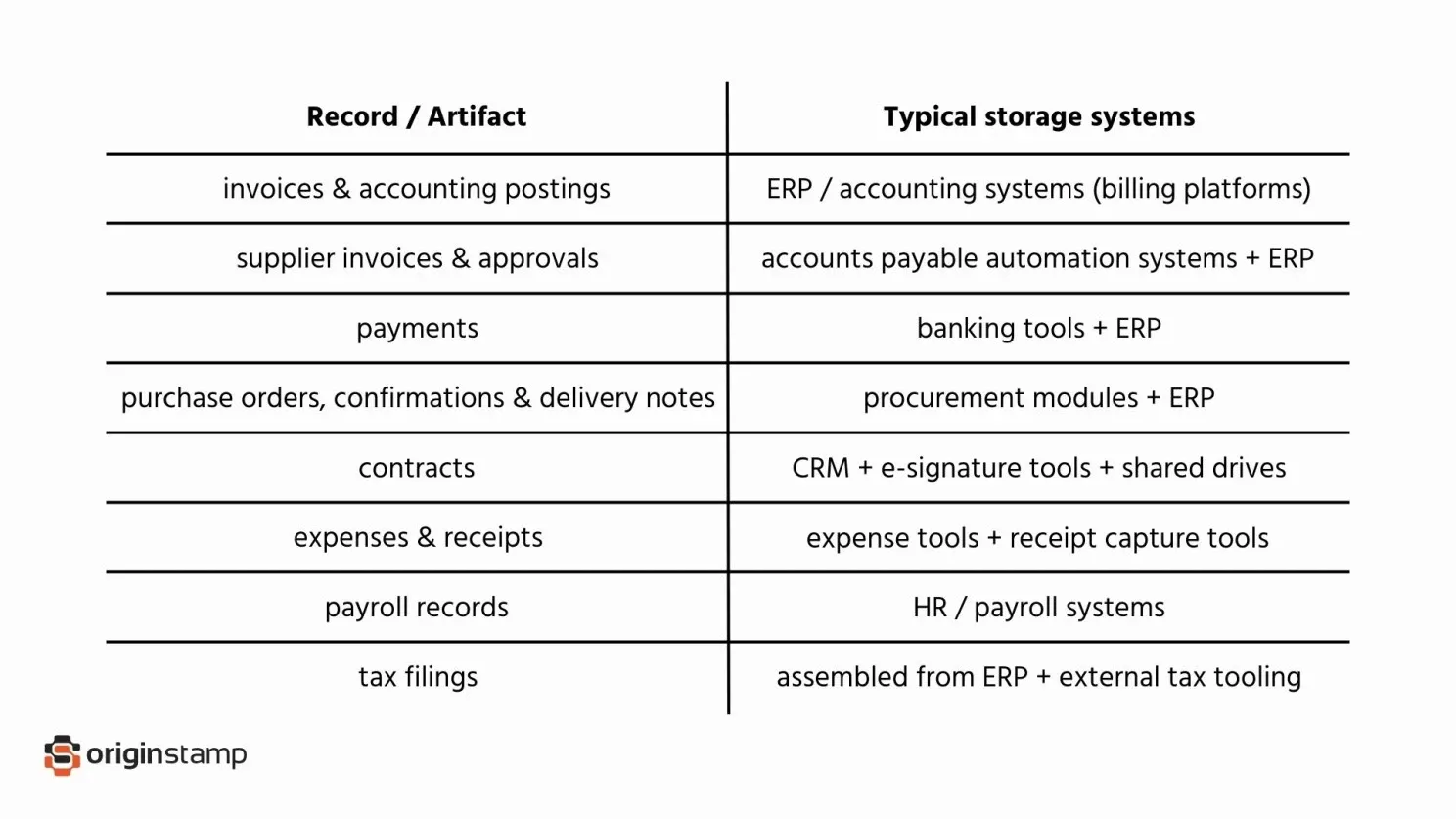
The important pattern is that these records are born inside transaction systems - the tools that directly produce revenue, control spend, and manage cash. However, most of these transactional systems are not compliant with international archiving rules. An integrated
solution could combine the compliance part of an archiving system and the transactional part of an ERP/CRM solution.
Now, why would it be attractive to sell an archiving add on for software vendors?
Big TAM (Total addressable market)
First, archiving compliance is universal, which makes the market broad: every company that buys or sells, pays people, and files taxes has record-keeping duties.
Extension of the value chain
Second, archiving sits right next to the product’s core job for ERP/CRM/expense vendors:. Your software already creates the canonical transaction and context (who, what, when, approval trail), and an archive’s job is to preserve that context as defensible evidence over time.
You are just adding one more automated step at the end of your document lifecycle.
Low-hanging upsell and cross-sell
Third, an archiving module is an easy cross-sell because it can be introduced with low operational disruption. The highest-value move is to start capturing and preserving all new records automatically (invoices, receipts, contracts, approvals) from day one, with metadata already available in the source system.
Historical migration can be optional and staged. That keeps adoption friction low and positions the module as “turn it on and reduce audit risk,” not “run a big change project.”
How are companies solving archiving today? How is the archiving market characterized?
Archiving is not disruptive or completely new.
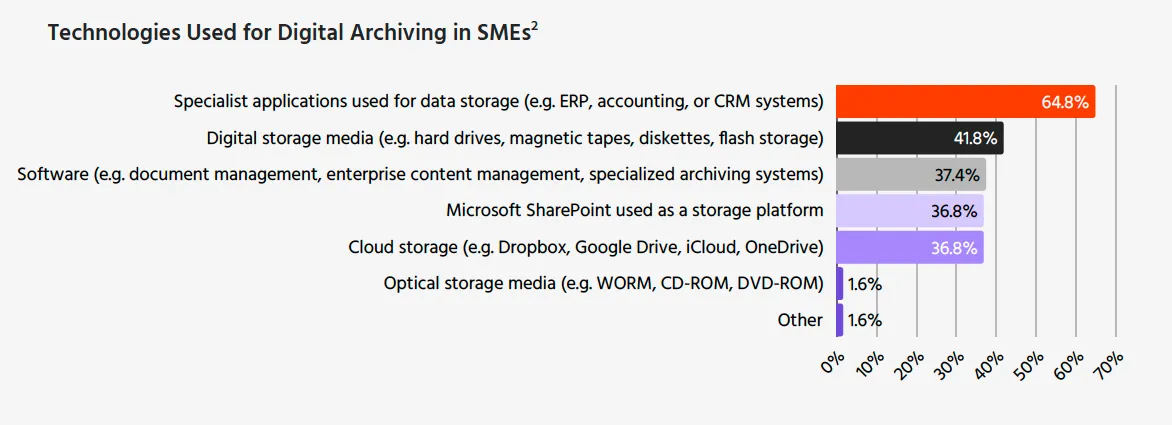
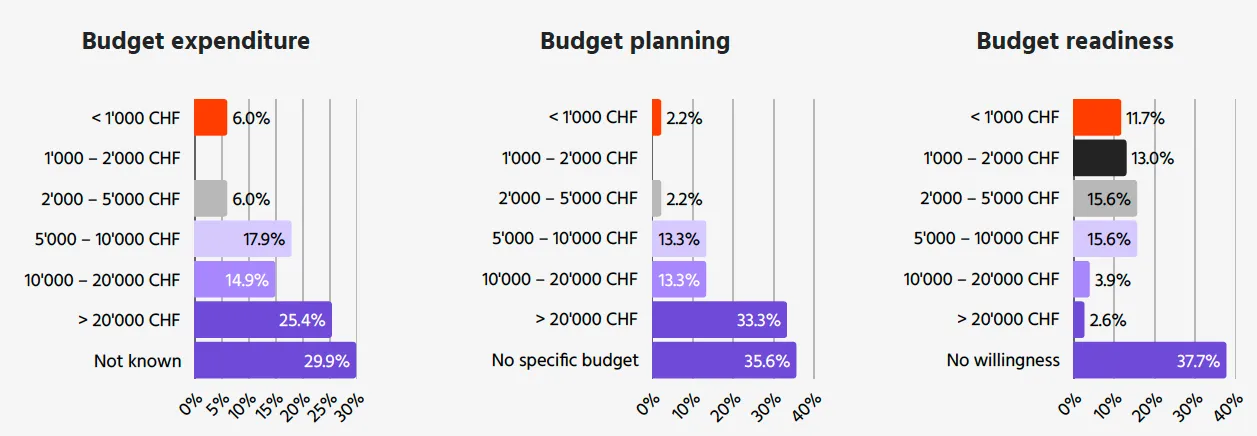
However, paper and manual handling remain stubbornly common even in modern enterprises. Ireland’s official enterprise statistics, for example, reported that 44% of enterprises used paper invoices (alongside various forms of electronic invoicing) in 2023. In a study carried out by Franco Loser in 2023 75% of swiss SMEs declared that they have not fully digitized their archiving processes. This indicates that there is a huge market opportunity waiting to be exploited.
Our own market experience has shown that many enterprises struggle to implement digital archiving solutions due to high setup costs and long implementation periods. With Low Code and No Code Solutions gaining traction, there simply is no need for the "workflow"-part in a DMS solution. Companies are moving towards a more flexible structure of singular systems solving a single issue connected by a workflow engine and APIs.
That means that any extra spending on unnecessary workflow features in these monolithic systems is cut. A modular archiving system is demanded by the market.
Sell the airbag!
For SaaS and ERP vendors, this poses a golden opportunity. Many vendors still frame compliance as an external add-on that customers can integrate via a standard interface. This is a strategic error, because you’re leaving the market potential and upside of an archiving product to external DMS, ECM, and archiving vendors.
If you understand the regulatory dynamic, you realize that your customers represent a pool of absorbed risk. By integrating a compliant solution into your product portfolio, you are not just adding a feature; you are performing risk arbitrage and strengthening your brand image while boosting ARPU and customer stickiness at the same time.
Reducing churn and increasing customer retention is really powerful. Increasing the retention rate by 5% can increase your profits by 25% to 95%. Once customers depend on your product not only to run transactions but also to defend them under audit, switching becomes materially harder. The result for the software vendor is a lower churn rate, a longer customer lifetime, and increased ARPU.
Summary
This entire deep dive boils down to one thing: people pay for problems they hate dealing with. Compliance and archiving are exactly that kind of problem. Here is what you should take away:
- Archiving systems are a hidden gold mine: once you understand that an archiving system boosts your existing ARPU across your entire customer base and reduces churn, it’s a no-brainer.
- Selling your own archive is low-hanging fruit and creates value for customers: the most requested documents are created in ERP, billing, CRM, and expense flows. Upselling an archive for these systems is very easy, and the immediate value is obvious.
- Customers don’t want “features.” They want closure. They want to tick the box on their compliance requirements list with the lowest amount of pain (and money) possible.
- Across jurisdictions, the technical requirements for archiving systems are similar: keep records for years, keep them readable, keep them tamper-evident, retrieve them fast, and keep context. This also means that archiving systems can easily be rolled out across multiple markets.
Should we start selling the airbag?
If you’re asking yourself, “Should we start selling the airbag?”, the best next step is to look at it in your own product context: which compliance records are born in your workflows, which markets you serve (or want to serve), and do you want to build your own archiving product (not recommended) or buy an external solution.
That’s exactly what we do at OriginStamp. OriginVault is a compliant whitelabelled archiving add-on we built for SaaS and ERP vendors—so you can offer customers closure (retention, integrity, fast retrieval, context) without dragging them into a heavyweight ECM or DMS project.
Citations and Links
Full study (in German): SWIDOC study on e-archiving in Switzerland
Hanna Lorenzer
Marketing
Hanna Lorenzer is a working student in Marketing at OriginStamp and strengthens the team through her work in outreach and communication. She develops and executes targeted outreach campaigns, manages contact with external sources, and ensures consistent, clear messaging across all channels. She brings ambition, creative curiosity, and willingness to explore new approaches. With a sharp eye for detail, Hanna edits and refines technical content so it becomes accessible and engaging. She supports the planning and implementation of social media campaigns, contributing ideas for formats, storytelling angles, and campaign structures that align with OriginStamp’s brand.